What gets decided before a Redding concrete removal starts
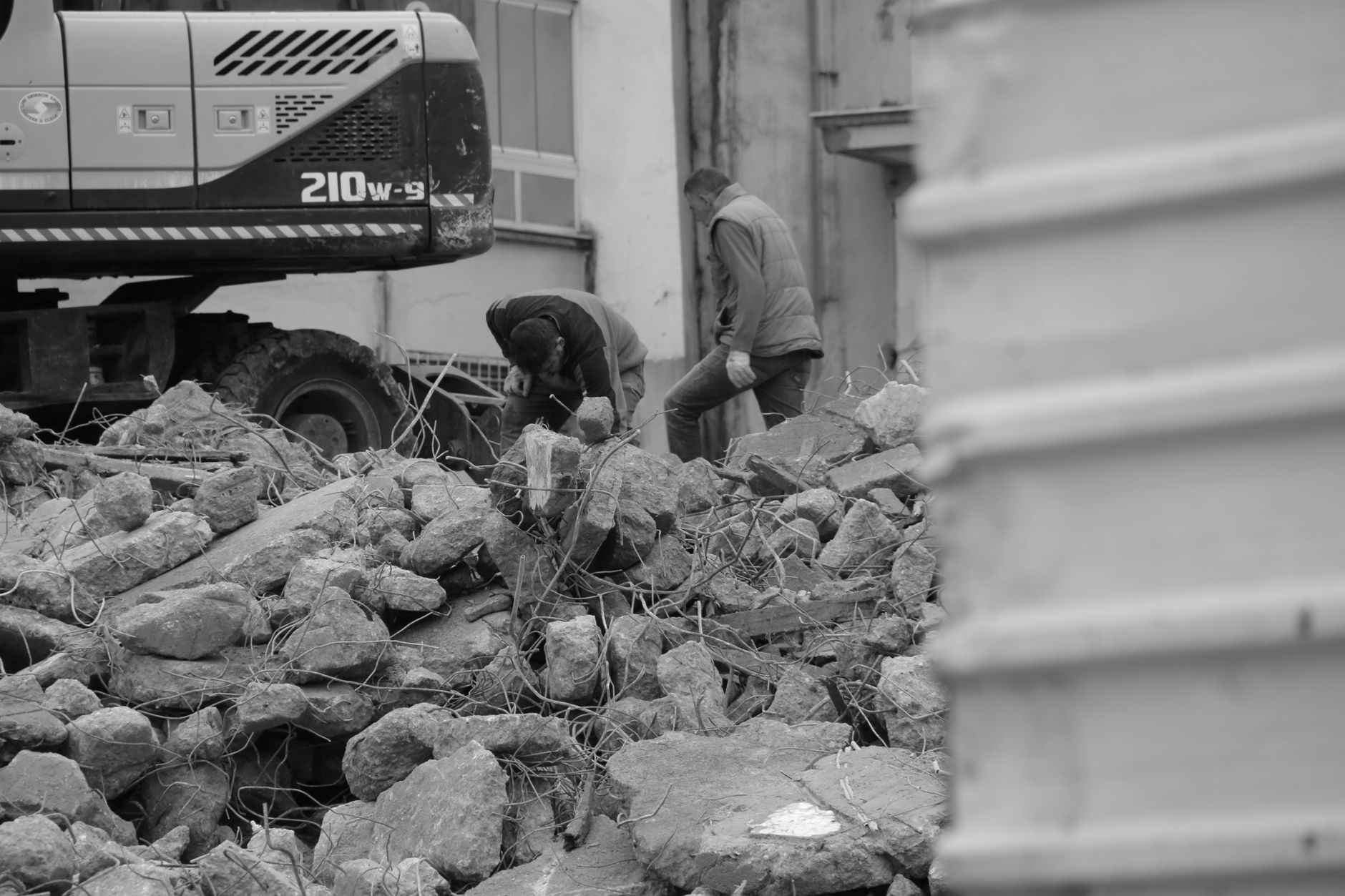
Before the first blow lands on a slab, a handful of decisions have already been made, and most of the problems on a removal job trace back to one of them being skipped. In Redding those decisions are shaped by clay soil, long dry summers and a county that remembers what a spark can do. The questions below are the ones that come up most often ahead of a concrete removal.
Does a concrete removal need a permit in Redding?
Pulling out a flat slab that is not attached to a structure usually does not need one, but anything that touches a foundation, a retaining wall or a footing under a building is a different matter. Removing part of a house foundation, a load bearing wall footing or a slab that carries a structure falls under building rules, and the city or Shasta County building department decides what applies depending on where the property sits. A call to the building counter with the address and a short description settles the question in a few minutes.
Pool removal is the clearest example. Filling or demolishing a pool nearly always involves the building department, because the backfill has to be engineered and inspected. A patio or driveway, by contrast, is generally treated as site work.
What gets marked before digging starts?
Buried lines are marked first. The state runs a free locating request system that sends utility operators out to paint the ground where their lines run, and a ticket is good for a limited time. Those marks cover gas, electric, water mains and communications. They do not cover the homeowner's own lines: sprinkler piping, a drain from a downspout, a septic line, an old well pipe or low voltage lighting.
Those private lines get found by hand. The sprinkler valve box is traced to the pipes it feeds, the septic tank lid is located, and the cleanouts on the house sewer line are noted. In older parts of Redding and out toward Anderson, a yard can hold pipe that was laid decades ago and never drawn on any plan.
How is access planned?
A mini excavator needs a path at least as wide as its tracks, and a gate narrower than that is a reason to pull a fence panel or use smaller tools. A skid steer needs room to turn. A truck needs a place to stand while it is loaded, and a driveway that is itself being removed cannot be the place.
Ground protection matters too. Heavy tracks dig into a lawn, and a loaded truck can break a neighbor's curb or crack an adjacent slab that is staying. Plywood sheets laid over turf and a chosen route in and out keep the damage down.
What happens to the dust and noise?
A breaker is loud enough to be heard down the street, and Redding has working hour rules for noisy equipment. Starting early in summer is useful for heat but has to stay inside those hours. Neighbors who know the day and the likely length of the noise tend to be much more patient than those who find out when it starts.
Dust control is a matter of water. A hose running over the slab as it breaks keeps the powder down, and a water truck handles larger jobs. Wind direction matters, and a breezy afternoon along the river can carry the cloud straight into a neighbor's pool.
What about the fire risk?
After the Carr Fire, summer work in Shasta County includes basic fire sense. Cutting rebar with a torch or grinder throws sparks, and dry grass catches. The usual precautions are simple: cut grass short around the work, wet the ground, keep a hose connected and charged, and use a reciprocating saw in place of a torch when the choice exists. On red flag days, hot work is simply postponed.
Can the foundation or the house be harmed?
It can, which is why the saw cut matters. Concrete poured against a house wall is bonded to it, and breaking the slab without separating it first can pull on the wall. A cut line or a row of drilled holes at the joint makes a clean break and leaves the stucco, siding and sill plate alone.
Vibration is the other concern. A hydraulic hammer on an excavator sends energy through the ground, and old brick, block or cracked foundations next to the work can suffer. Smaller tools near the house, and a machine only where the distance allows it, keep the shaking at a safe level.
What if the slab is thicker than expected?
Surprises show up most often at the edges and corners. A driveway shown as four inches in the middle can be eight at the edge where it was poured with a thickened footing. Old patios sometimes sit on top of an earlier patio, giving two slabs stacked. Tree roots can lock a corner in place.
A test breaking in the first hour shows what is really there. If the plan assumed a light breaker and the slab turns out to carry rebar, the tool choice changes then, not after three hours of struggling.
Who decides what stays?
This is the question that gets the least attention and causes the most arguments. Slabs run under planters, along fence lines and around trees, and the line between what comes out and what stays needs to be marked on the concrete itself with paint before work begins. A fence post set in the slab, a stair, a retaining wall, a gas meter pad: each is either part of the job or off limits, and a painted line says which.
How is the replacement handled?
If something new goes in, the demolition plan includes the ground. The clay is scraped to a firm base, any soft spots are dug out, and crushed rock goes down in compacted layers. Forms for a new pour, or sand and pavers, are set to a slope that carries water away from the house. Leaving that step until after the old slab is gone, with no plan, is how a yard ends up as a mud pit for weeks.
If nothing goes in, the fill is graded and compacted so water does not pool, and a layer of topsoil or gravel stops the clay from cracking open in the dry months.
How is the debris accounted for?
Broken concrete is heavy and goes by weight. A rough count of the area and thickness gives an estimate of the tonnage, and that decides how many truckloads, which yard takes it and whether it needs sorting. A mixed pile with drywall, wood or trash is handled differently from a clean one, so the pile is kept clean from the first piece broken.
What is the sequence on the day?
Marking and protection come first. Saw cuts or drill lines go in at walls and at anything staying. Breaking starts at an edge and works across. Steel is cut as it appears. Pieces are loaded as they come, not left to stack up. Fill and grading finish the day, so a hole is never left open overnight near a gate or walkway.
A removal planned this way takes a morning for a patio and a day or two for a driveway. Skipping the planning turns the same job into a week of repairs.