Can a homeowner break out a Redding concrete slab with a rental breaker
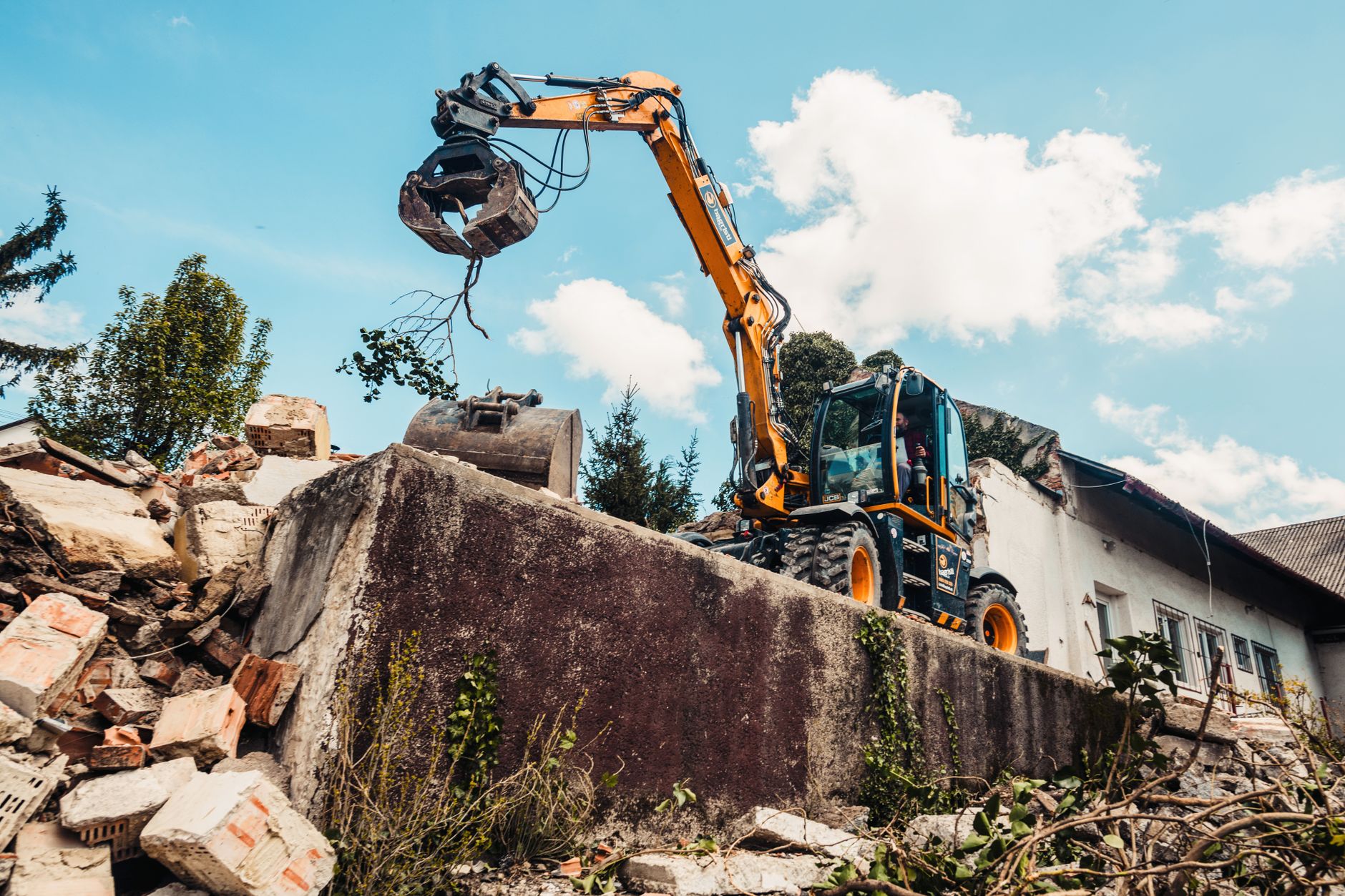
A rented electric breaker will take apart a small patio in a weekend, and the same tool will beat a person senseless on a driveway. The difference between those two jobs is not effort. It is slab thickness, steel, and what the ground underneath is doing, and in Redding the ground is clay that never stays the same two months in a row.
This is a look at what each tool can actually do to concrete, where the physical limits sit, and what tends to go wrong when a homeowner takes on a slab with hand tools instead of a machine.
What does a rental breaker actually do to concrete?
A breaker drives a chisel into the surface with repeated blows, and the concrete fails along the line of weakness the chisel creates. Electric units in the sixty-pound class are made for slabs about four inches thick without heavy steel. Air-driven and gas-driven units run heavier and hit harder, but they need a compressor or fuel and they are harder to control.
The tool does not chew through concrete. It cracks it, and the cracks run from the chisel point outward. The best technique is to start at an edge or a crack that already exists, drive the chisel in at an angle, and pry a piece loose rather than trying to punch a hole through the middle. Starting in the middle of a slab is the commonest rookie mistake, because the surrounding concrete holds the piece in place and the chisel just bounces.
A good operator works a line, breaking a strip a foot or two wide across the slab, then levering the pieces out with a bar. Once one strip is open, every next strip has a free edge to break toward, and the work speeds up considerably.
Which tool fits which slab?
Choosing a tool is mostly a question of thickness and reinforcement. The table below lays out the general fit for slab work around Shasta County.
| Tool | Slab it suits | Weak point |
|---|---|---|
| Sledgehammer and pry bar | Thin walkway, three inches or less, no steel | Slow, hard on the back, useless on mesh |
| Electric breaker | Patio or walkway, four inches, light mesh | Overheats, struggles with rebar |
| Air or gas breaker | Driveway, up to five inches with mesh | Heavy to hold, loud, needs a compressor or fuel |
| Demo hammer on a mini excavator | Most residential driveways and pool decks | Needs access and a place to turn |
| Skid steer with breaker or bucket | Large lots, thick slabs, loading the broken pieces | Needs open ground and a flat run |
The weak point column matters as much as the fit column. A tool used outside its range does not simply work slowly. It fails, heats up, or hurts the operator, and the job stalls half done with a slab that is now broken into awkward pieces.
How does steel change the work?
Wire mesh and rebar are the reason a slab that looked easy turns into a long day. Mesh in a patio slab is thin and gets cut with bolt cutters once the concrete around it is broken. Rebar is heavier, usually half-inch bars laid in a grid, and it does not break. It bends. A breaker working on a rebar grid ends up with chunks of concrete still hanging off the bars, and the bars have to be cut with a reciprocating saw with a metal blade, a cutting torch or an angle grinder.
Steel also grabs the tool. A chisel driven down beside a bar can jam, and a stuck breaker is heavy to free. Experienced operators break the concrete off one side of the bar, then cut the bar, then move on, instead of trying to drive through both.
What does Redding clay do to the job?
Dry clay under a slab is hard enough to dull a shovel. Wet clay under a slab is paste that grabs boots and wheelbarrow tires. Because the soil moves with the seasons, many Redding patios sit on a gap where the clay has shrunk away. That gap makes the first strip easy to break and the pieces fall into the void, but it also makes the slab unpredictable. A section can snap sooner than expected and drop.
The ground also shapes what happens after the concrete is gone. A bare clay surface turns to mud in the first rain and cracks into plates in the first week of heat. If anything new is going in, the clay is usually removed to a few inches down and replaced with compacted crushed base, because pouring or laying pavers on raw clay repeats the original problem.
What is hiding next to the slab?
Sprinkler lines, drip tubing, low voltage lighting wire and the occasional buried gas or water line all run near patios and walkways. A breaker chisel does not care what it hits. Before any breaking starts, the yard gets walked and the likely routes are marked: where the sprinkler valve box sits, where the hose bib is on the house wall, where the meter is. Calling the free utility locating service before digging deeper than a few inches is standard, and it is the sensible habit before any heavy tool goes near the ground.
Fences, block walls and the house foundation matter just as much. Vibration from a breaker travels through the slab and into anything attached to it. A patio poured tight against a stucco wall can crack the wall finish when the slab is hit hard. The cure is a saw cut or a row of closely spaced drill holes along the joint, so the slab separates cleanly from the wall before the heavy hitting begins.
How long does a small removal take by hand?
A ten by ten foot patio, four inches thick, with no steel, works out to a bit over a cubic yard of concrete. With an electric breaker and a helper, the breaking usually takes a morning. The loading takes longer than most people expect. Every piece has to be lifted, and a piece the size of a doormat weighs more than a bag of cement. Wheelbarrow trips add up quickly across a yard with a gate or a step.
That is where a machine earns its place. A mini excavator or skid steer does the same loading in minutes, and it can tear out the thickened edges and the footing along the border that a hand breaker cannot move. For a driveway, the amount to load runs to several tons, which is outside what a person with a wheelbarrow can sensibly manage.
What protective gear is not optional?
Breaking concrete throws chips at speed. Safety glasses are the minimum, and a face shield is better. Hearing protection matters, because a breaker runs well above the level at which hearing damage starts. A dust mask rated for fine particles is needed, because cut and broken concrete releases silica dust, which damages lungs over time. Gloves with some padding cut the vibration through the hands, and steel-toed boots are worth wearing because a dropped piece of slab lands hard.
Wetting the work with a garden hose settles most of the dust. In Redding summers, wet concrete dries quickly, so the hose is used constantly during the breaking, not just before it starts.
Where do the pieces go?
Clean broken concrete, free of soil, wood and trash, is accepted at recycling yards in Shasta County and is crushed into base rock. Mixed loads are treated differently, so sorting matters. Rebar gets pulled out and goes to scrap. Some people keep pieces to use as fill under a new patio or along a drainage trench, which works so long as the pieces are broken small and buried well below the surface.
A rented dumpster or a hauling trailer with weight limits in mind is the common route. Loading a pickup bed to the brim with concrete overloads the springs, and the truck sits low for the drive. Several smaller loads beat one dangerous one.
Is it worth doing by hand?
For a thin walkway or a small pad with no steel, yes. For a driveway, a pool deck, a footing or anything with a rebar grid, a machine and an operator who has done the job before saves the weekend and often the back.